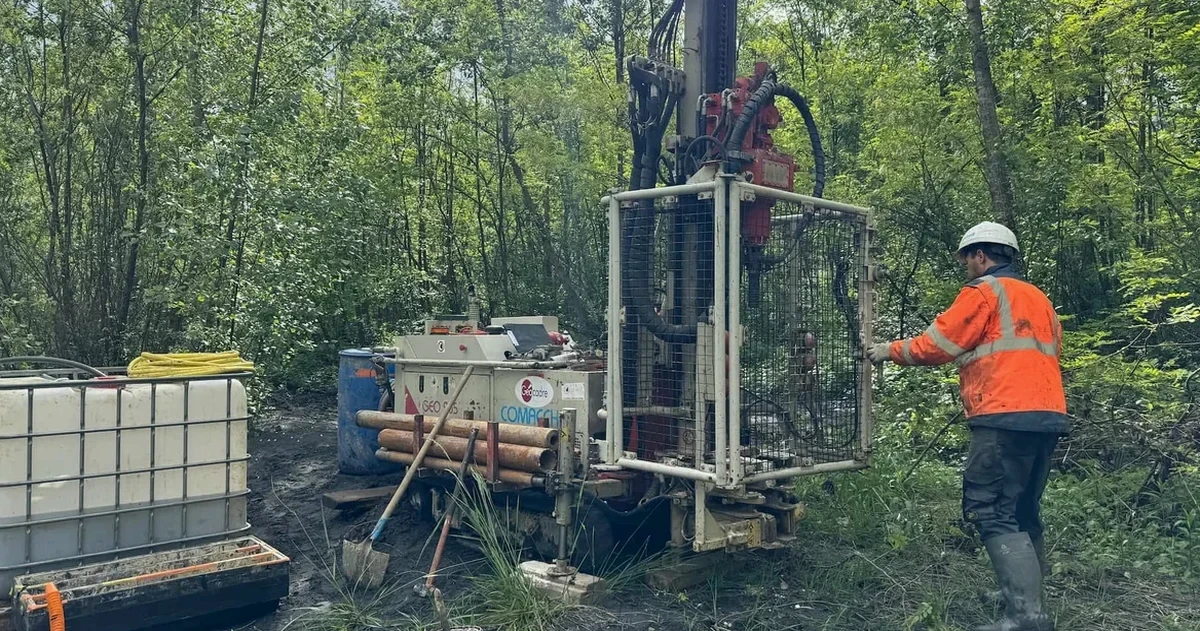
Compliance with the Irish Building Regulations (Technical Guidance Document B) and Eurocode 7 (IS EN 1997-2:2007) is not just protocol in Tralee—it’s essential. The town’s location on the Lee Valley floodplain and its proximity to the Sliabh Mish mountains create a patchwork of alluvial silts, glacial tills, and peat deposits. A soil mechanics study here must account for the high water table south of the River Lee and the softer ground in areas like Ballyard. We run standard index testing and advanced strength analysis to deliver ground investigation reports that the Kerry County Council will accept without revision. Our lab in Ireland processes Atterberg limits, triaxial compression, and one-dimensional consolidation alongside field data from test pits to build a complete geotechnical profile.
Tralee’s ground is a mix of limestone gravel ridges and soft peat hollows—guessing the soil profile without a lab program is a costly risk.
Regional considerations
The microclimate east of Tralee, against the north face of the Stack’s Mountains, produces intense rainfall events that saturate the shallow drift deposits much faster than in the drier Dingle Peninsula. When this saturation hits the laminated silt layers common in the Lee Valley, drainage is poor, and excess pore pressure builds. A soil mechanics study that skips effective stress testing or over-consolidation ratio determination will underestimate settlement and could miss a rotational slip risk in temporary works. We factor in these seasonal moisture fluctuations when interpreting lab results, ensuring that the derived angle of shearing resistance reflects the worst-case groundwater scenario likely during construction in Tralee.
Relevant standards
IS EN 1997-1:2004 + Irish National Annex (Eurocode 7: Geotechnical design), IS EN ISO 17892-1:2014 (Water content, density, and particle density), IS EN ISO 17892-12:2018 (Determination of liquid and plastic limits), Technical Guidance Document B (Fire) and associated ground investigation guidelines
FAQ
What does a soil mechanics study cost for a single house in Tralee?
For a typical residential plot, the lab testing package and reporting range from €3,050 to €4,520. The final figure depends on the number of boreholes and whether advanced tests like triaxial compression are required by the consulting engineer.
How long does the lab testing phase take after sampling in Tralee?
Index tests like moisture content and Atterberg limits are completed within 5 working days. Consolidation and triaxial tests require 2 to 3 weeks due to the time needed for saturation and shearing stages, especially for low-permeability clays found in the Lee Valley.
Can you test for pyrite or sulphate content in Tralee’s fill material?
Yes. We run chemical analysis alongside the mechanical suite. Total sulphate, water-soluble sulphate, and pH are measured according to IS EN 1744-1 to assess aggressive ground conditions for buried concrete, which is a known issue in some Kerry shale fills.