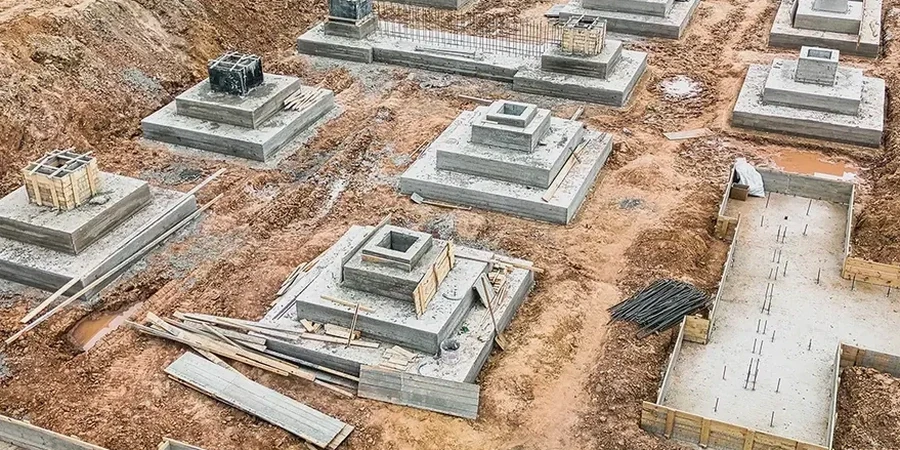
Pile foundation design in Tralee demands a rigorous understanding of the local geology, which is dominated by Devonian limestone bedrock overlain by a complex sequence of glacial tills and alluvial deposits. The National Annex to Eurocode 7 (IS EN 1997-1:2004) governs our approach, requiring comprehensive ground investigation before any deep foundation work proceeds. Tralee sits on the northern flank of the Lee Valley, where the River Lee’s floodplain has deposited soft silts and peats that can extend to depths exceeding 6 metres in certain pockets near the town centre and outlying areas like Blennerville. Before committing to a pile layout, we integrate data from a CPT test to delineate the thickness of these compressible layers and confirm refusal depth on the karstified limestone. With an annual rainfall exceeding 1,200 mm, groundwater management is a permanent design consideration in Tralee; fluctuating water tables within the glacial till can alter effective stress and require careful negative skin friction analysis on pile shafts.
A pile’s capacity in Tralee is dictated by the limestone pinnacles below; miss a weathered fissure and the structural settlement can exceed 50 mm within the first year.
Our approach and scope
In Tralee, we often encounter a weathered limestone pinnacle topography that significantly complicates pile toe levels. A single site can show competent rock at 4 metres in one location and weathered clay-filled fissures at 12 metres just ten steps away. This variability makes a purely desk-based pile design unreliable; we rely on dynamic probing and rotary coring to map the bedrock profile. The pile foundation design process addresses not only axial capacity but also lateral response, critical for structures exposed to Atlantic storm winds sweeping up the Tralee Bay. When the upper strata are too weak to support shallow options, we design displacement or CFA piles to transfer load to the deeper, more competent bedrock. For projects where the limestone is sufficiently massive, we occasionally recommend combining deep foundations with grouting to seal solution cavities before pile installation, preventing concrete loss during casting. Our team applies the Irish standard IS EN 1997-2 for ground investigation interpretation, ensuring the characteristic pile resistance is derived from statistically sound methods rather than a single borehole log.
FAQ
What is the typical depth of piles in Tralee’s ground conditions?
Pile depths in Tralee typically range from 8 to 18 metres, depending on the depth to competent Waulsortian Limestone. Sites near the River Lee floodplain often require longer piles to bypass soft alluvium and reach rockhead, while areas on higher glacial till may find refusal at shallower depths.
How do you address the karst limestone risk in pile foundation design for Tralee?
We specify probe drilling at each pile location to detect voids or soft clay-filled fissures before the main piling rig advances. If a cavity is identified, we pre-grout the zone to stabilise it, ensuring the pile concrete is confined and the design base resistance is achieved without excessive material loss.
What is the cost of a pile foundation design package in Tralee?
A complete pile foundation design package in Tralee, including interpretive reporting, pile load test specification, and construction support, generally falls between €1,680 and €5,240. The exact fee depends on the number of piles, the complexity of the ground profile, and the required level of construction phase monitoring.
Which pile type is most suitable for Tralee’s glacial till?
Continuous Flight Auger (CFA) piles are widely used in Tralee’s glacial till because they minimise vibration and can be installed quickly through stiff boulder clay. Displacement piles are also effective where the till is matrix-dominated, offering good shaft friction without generating spoil that requires off-site disposal.