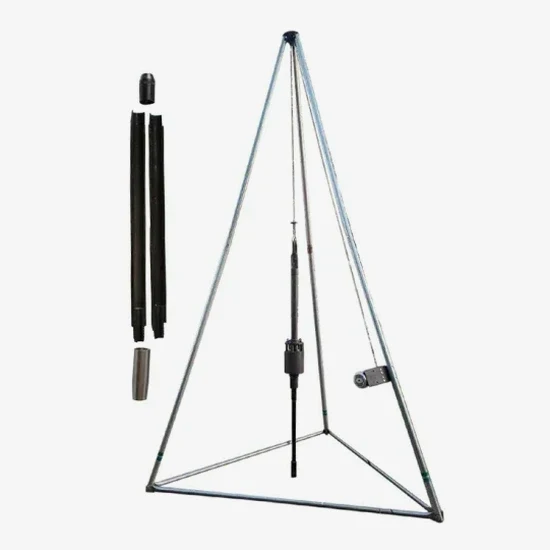
Tralee sits at roughly 10 metres above sea level, with the River Lee's floodplain defining much of the town's shallow subsurface. For any build beyond a single storey, that means dealing with a mix of dense glacial till and pockets of soft alluvium that can vary drastically across a single site. On a recent job off the Castlemaine Road, we pulled N-values swinging from 4 to 42 within ten vertical metres. That kind of scatter is exactly why the Standard Penetration Test remains the baseline investigation tool here. The soil profile you assume from a desk study rarely matches what the split-spoon sampler brings up. Getting the SPT data right from the start avoids surprises later, whether you're tying into a footing detail or checking settlement under a mat foundation on compressible silts. Our rigs mobilise quickly across Kerry, from Listowel down to Killorglin, keeping your programme on schedule.
N-values in Tralee's glacial tills can jump from single digits to refusal within a couple of metres – understanding that transition is what separates a safe foundation from a future claim.
Regional considerations
We logged a commercial development near the Aquadome where the client had assumed a stiff boulder clay across the footprint. The SPT told a different story: four metres of firm material, then a two-metre band of soft, normally consolidated silt that hadn't shown up on the trial pits. The N-values dropped to 3. That soft layer, undetected, would have meant differential settlement across the slab, cracked partitions, and an expensive remedial job two winters later. Tralee's geology is full of these lenses, remnants of the last glaciation draped over the limestone bedrock. Skipping the SPT or spacing boreholes too far apart is a gamble. Even a single borehole that misses a soft pocket can give a false sense of security. The correction factors for overburden pressure and energy ratio matter here because the water table is often within two metres of the surface, and fine-grained soils can liquefy the blow counts if you don't account for it properly. For sites near the river, we often recommend coupling the SPT with a liquefaction assessment where the silt fraction exceeds 15%.
FAQ
How much does an SPT borehole cost in Tralee?
For a typical investigation in the Tralee area, SPT boreholes generally range from €420 to €770 per hole, depending on depth, access conditions, and whether you need piezometer installation or laboratory testing. Mobilisation across County Kerry is included. We'll give you a fixed price before the rig moves to site.
How many SPT boreholes do I need for a house extension in Tralee?
For a standard single-storey extension, two boreholes placed diagonally across the footprint are usually adequate. If the site is on the floodplain near the canal or shows variable ground in neighbouring properties, three boreholes give better coverage. The key is capturing lateral variation in the glacial till, which can change sharply across short distances.
What depth do you drill SPT boreholes in the Tralee area?
Most residential and light commercial jobs go to 8–12 metres below ground level. For two-storey structures on softer ground, we often extend to 15 metres to confirm refusal on the limestone bedrock. Deeper investigations to 25 metres are typical for apartment blocks or where deep piles are being considered.
How long does it take to get the SPT report after fieldwork?
You'll have the factual report within five to seven working days after the rig leaves site. The report includes the borehole logs, N60 values, soil descriptions to I.S. EN ISO 14688, and field observations. If laboratory testing is included, add three to five working days for grain size and Atterberg results.